
The Killing of the Father
I consider myself fortunate to have been surrounded by close friends when I received the call. It was 2011, and I was at the Kimberley Diamond Cup. For the South African skate scene, it was a momentous gathering – the first time all the crews were together in one place. In retrospect, it was a wonderfully irresponsible occasion. It was a cold September morning. We were at the campsite, curing our hangovers, when my phone rang. I answered the call, and looked up to meet my brother’s eyes. “Your father died yesterday. It was a microlight accident,” Martin said through his tears. “Thank you.” I put the phone down, walked over to Joubert, and whispered to him that we needed to talk. Away from the group, we cried for a moment. We decided it best to keep the news of our father’s death to ourselves until the weekend was over.
When I was four, they filed for divorce. Ma had to make it work on her own with the two of us. We travelled with her across the country. At first, we saw Pa once a week as he was running a project close by; later, we saw him only once or twice a year. After every visit, I would cry myself to sleep when he left. On birthdays we would get presents from him with letters written in Ma’s handwriting.
I was caught smoking cigarettes across the road from our primary school at a friend’s house. The news was carried to Pa just before our visit to Maputo for the school holidays. Anticipating the worst, I stayed quiet when he picked us up from the airport. He was pissed off initially, but with a smiling understanding, he told us the story of how he was busted smoking cigarettes with his two brothers behind the shed at the house in Witrivier. Oupa had smelled it on them and disciplined Peet, the youngest, first. Pa was next. A hiding for smoking, and then another for failing in his responsibilities to his younger brother. Joggie, the eldest, got it the worst.
Pa had an office in Maputo, and over the years Joubert and I spent visiting him there, we became familiar with the city. During the day, he would let us skate around by ourselves and explore until the sun set. He seemed to be an important man. To our adolescent eyes, he was The Man. People listened to him when he spoke. We listened to him. “Do something right, or don’t do it at all,” he always said. His work consumed him. I frequently felt something was chasing my father – he was in a perpetual hurry. At almost two metres tall, we were always trying to catch up to him. His long legs carried his blue jeans just out of reach.
When Pa was sixteen, he fainted while cycling from Witrivier to Nelspruit. When he woke up from the coma a week or two later, he had lost his sense of smell. He only started regaining his smell in his forties. Pa always said he missed the scent of rain falling on dry roads the most.
Once or twice, on a road trip through Namibia and Botswana for my matric holiday, Pa stopped and stepped out by himself to consider the landscape. Remnants of a gate or broken stone walls were of no particular interest to me, but I sensed he recalled the place. Growing up, we were aware that he spent time in the army. We saw the uniformed photograph. But we never discussed any details regarding his conscription, nor did we have any inclination to ask him about it.
Six years after his death, I was invited to attend a photography masterclass in Kenya. It was decided that Joubert would join me there two weeks before the class started. It was a pilgrimage of sorts, a return. We interviewed many of the people who saw Pa in his last days. We heard he was seen strolling on the beach by himself, seemingly content. Joubert and I mourned. I photographed.
When I presented to the class, Akinbodi said: “You have to go deeper.”
On returning home, I asked Oom Joggie for Pa’s hard drives. I was looking for something but quickly realised it would be a mammoth task to work with Pa’s immense photographic archive. Desert landscapes, portraits of people he met on the road, aerial shots, intimate photographs of his lovers. I felt I was investigating someone, looking for secrets, something I might have missed. Something to fill the holes. But really, I was looking for anything to bring him back to life. Instead, I found a document called My Decisions.
“I joined and did what I did because I wanted to kill people.”
In this letter to himself, Pa lays bare the source of his darkness and articulates the consequences of his actions. It was always there under the surface, waiting, only to burst out at a moment’s notice, breaking his nine iron against a tree. That thing me and Joubert were most afraid of. That fucking temper. The frustration. The suffering.
The letter contains two parts. In the first, Pa offers his motivations, convictions and justifications for joining the army and to fight in the Border War. A stupid boy. He confesses to the horrific acts of violence he took part in and witnessed. In the second, Pa narrates his love life – the latter forever haunted by the former. Quickly feeling trapped, he sabotaged all his relationships. The way he dealt with his anger is one I inherited. When I, too, grow angry with the people I care most about, I become an imitation of him.
After reading the letter a few times over and showing it to Joubert, we tried to make sense of the scale of its implications. Is this shit real? Did he really do these things? Why the fuck was this never discussed?
I then called the psychotherapist, who encouraged Pa to write. I was met with silence – patient privacy extends even into death. I had to find out more. My only choice was to visit the family and confront them. I needed to hear from them what happened to their seventeen-year-old son and brother.
I sat around the deserts of their kitchen tables, begging for water. Any and all the childhood stories about Pa they could muster from memory, I soaked up. They understood what I was doing. It was difficult for them, yet I felt strangely enriched by the knowledge of their upbringing.
We read the essay together.
My father killed and tortured people. This much is true. If his time as a conscript is a seed, a forest of consequences has grown from it. I do not wish to apologise – this is not my place. But neither do I want, inadvertently, to stir up feelings of guilt. Most importantly, I wish to stray as far as possible from any notions of victimhood. I wish only to understand how my family arrived where we are today and to what extent I am a product of my father.
In a small town in the South of France, I was invited to attend an exhibition of South African photographers. I met a man there. He was in his sixties, and I called him Oom Theo. He had an ease about him; unbothered by the crowd and overjoyed he could speak Afrikaans with me. We discussed how he came to be in Nîmes, how he learnt the language and married a French woman. When he was called upon to report for conscription, Oom Theo said fuck that. He left his family behind in South Africa and spent his youth touring around Europe after his favourite bands. He claimed to know the secrets of Jim Morrison’s death and even saw Pink Floyd live.
What he doesn’t know about, however, are his shoulders and the weight they never had to carry.Whether South African or Angolan, black, white or of Khoi descent, The Border War conscript and his family, hobbles uphill.
The letter my father wrote to himself does not appear in this book. To include it would only overpower and distract from the story. My story follows no narrative and offers instead a slow accumulation of traces, a collection of half-finished thoughts and imperfect recollections.
I ask that you look carefully at the images as both discrete pictures and the many parts of a fragmented whole. I want you to be confused. I want you to understand how the photographs and their sequence reflect my process; its segues and false-starts, cul-de-sacs and forks. My memories of Pa, weaving through South Africa’s recent past, find imperfect expression in my family’s archives. However private, their archive extends considerations on the Church and State as inseparable ideological pillars of that generation. Other images confront my father as a body and still more test my relationship with my brother. Together, they offer an oblique portrait of a man and a country, the histories of which continue to shiver along my spine. In scratching where it doesn’t itch, in provoking ghosts, I’ve realised that my present situation, who I am, is a direct consequence of my father’s time as a conscript and everything that led up to it.
Image 1
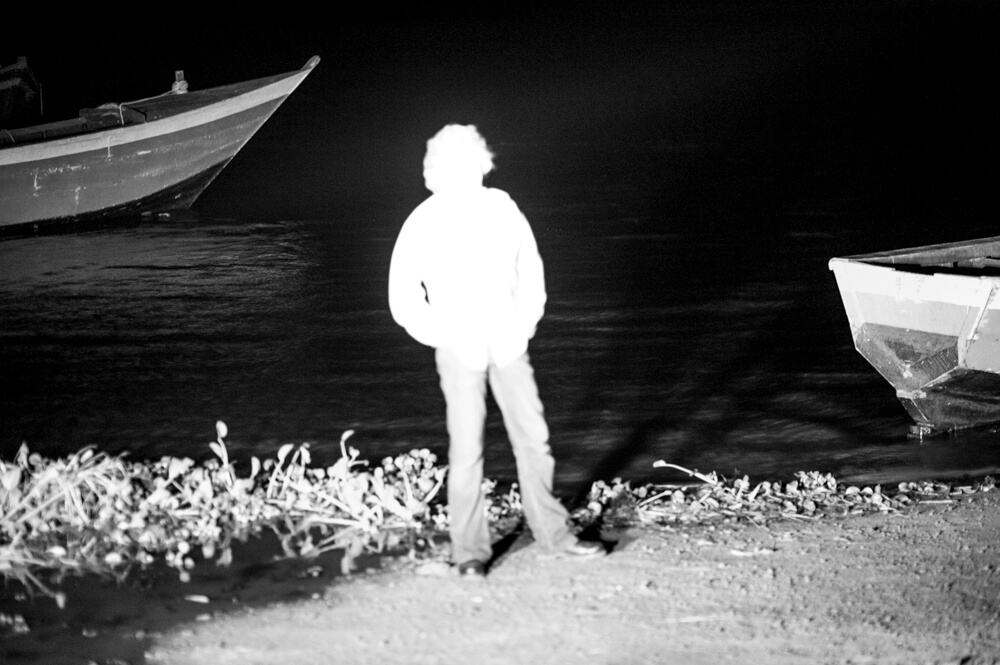
Pa, Lake Albert, Uganda, 2010
Pa’s work involved training management on mega civil engineering projects. Arguably, his most successful endeavour was his involvement in the construction and operation of an aluminium smelter called Mozal, in Maputo, Mozambique. These projects all followed a sustainable development strategy Pa formulated, which was later acquired by the World Bank. It involved the training of people local to the project, to construct, sustain and operate the project, empowering the local economy
with their own skills and resources.
In 2010, Pa was called upon by Henry Kajura, the then
deputy prime minister of Uganda. Pa was to help facilitate the negotiations between the Ugandan government and a major oil company following the discovery of a large onshore oil reserve in Uganda’s Lake Albert region. Pa asked me to accompany him and to document the trip. We drove from his office in Northern Mozambique to Uganda and back in 21 days.
Image 2
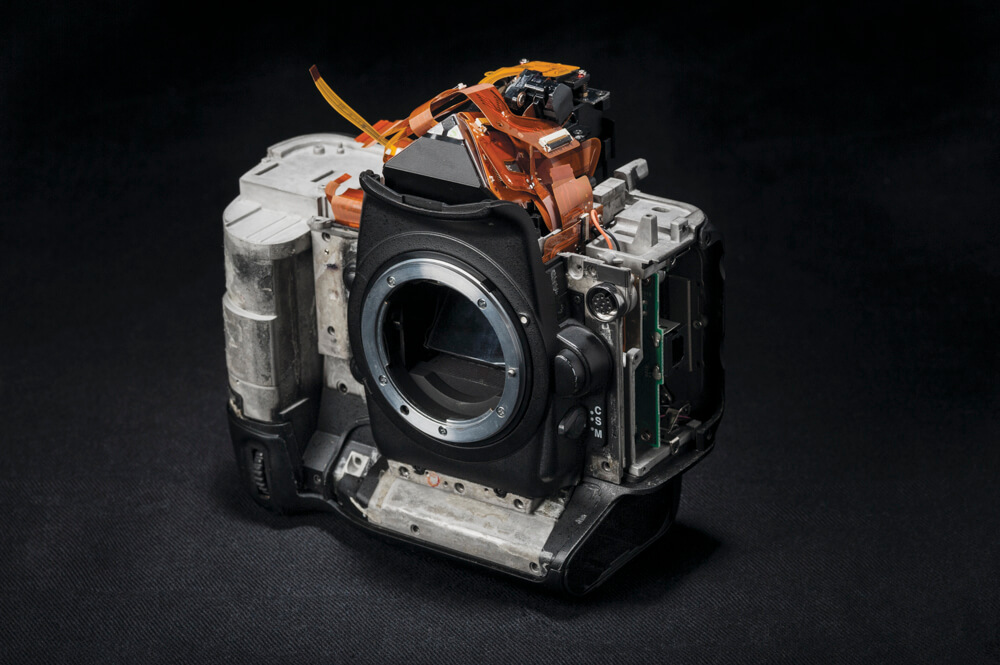
The story of Pa’s camera, the crash, and the surviving sensor
A few months after I purchased a second-hand Nikon D3, I realised that the sensor was scratched. I knew I wanted to photograph what was left of Pa’s D3. So I had both cameras taken apart. Pa’s newer shutter and his spotless sensor were reassembled into my camera. I then proceeded to capture Pa’s D3 on its own sensor.
Image 3
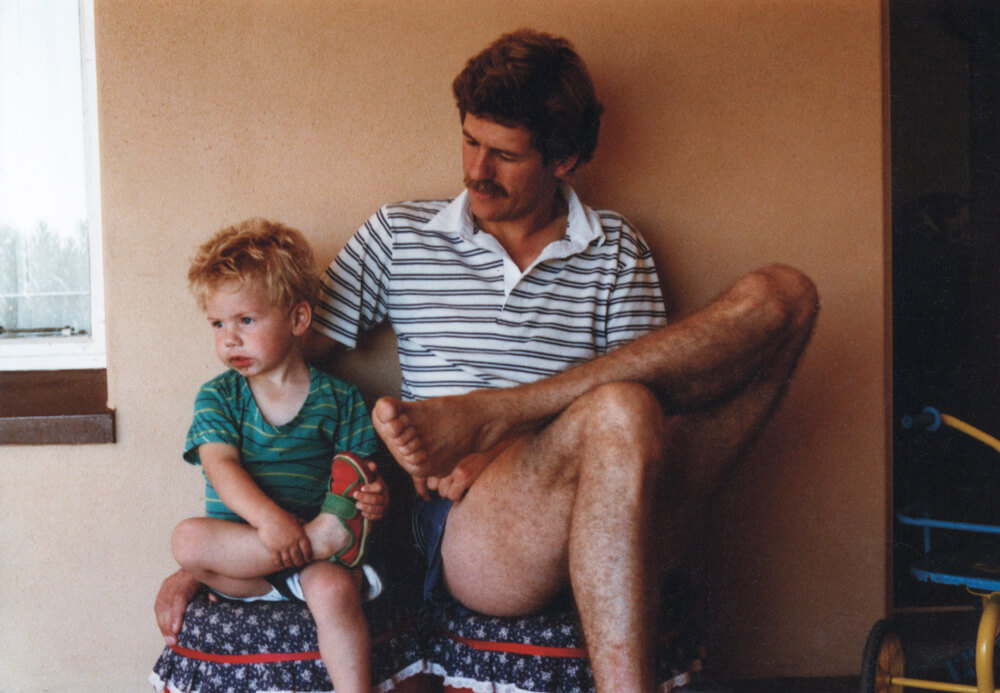
Pa and I, 1989
Image 4
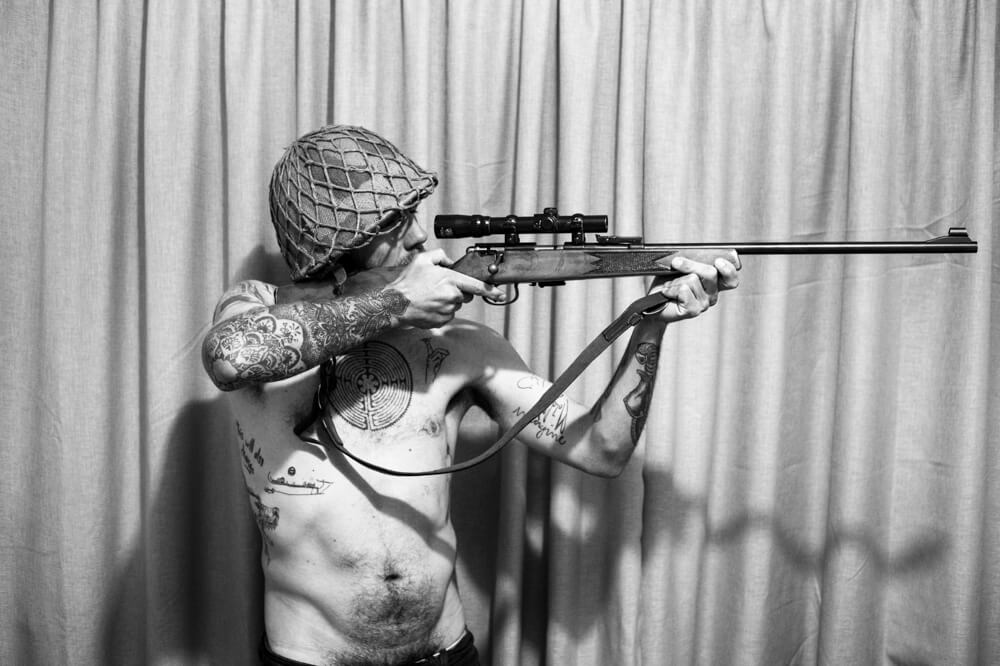
The story of Pa’s chickens, the neighbour’s dog and Oupa’s gun
Pa raised chickens in his teens. He was very proud of them. Upon returning home one day, Pa found all his chickens had been killed. The neighbour’s dog had gotten into the coop and mauled them. In retaliation, Pa walked into the house and opened Oupa Peet’s gun closet. Armed with a .22-calibre rifle and some bullets, he scaled the wall and found a spot on the roof. He trained his sight on the dog door and waited patiently for the dog to emerge. An eye for an eye. Apparently Pa got the hiding of his life. The gun now lives in
Oom Stef’s gun closet, after Pa refused it as his inheritance.
Image 5
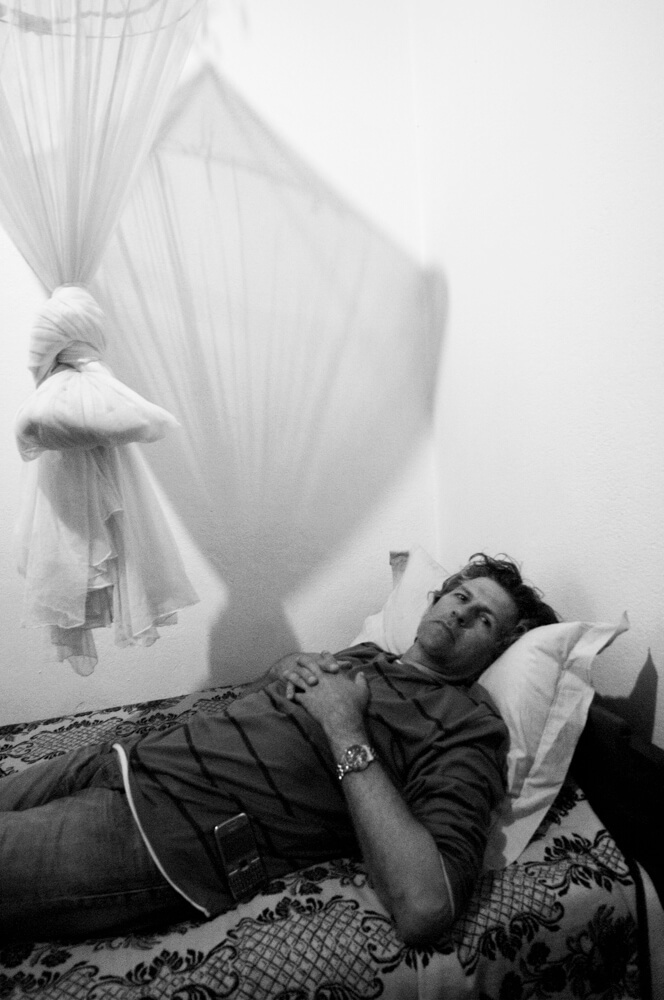
Pa in our room in Hoima, Uganda, 2010
Image 6
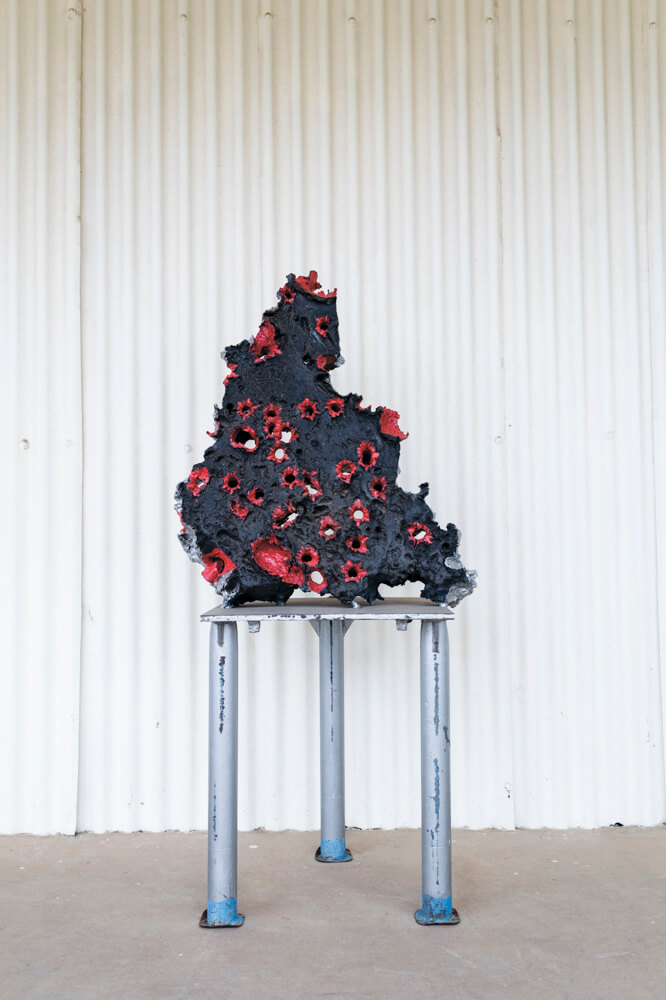
Wounded metal, Bloemfontein, 2018
A thick piece of solid metal outside the South African Armour Museum illustrating the damage that can be caused by bullets.
Image 7
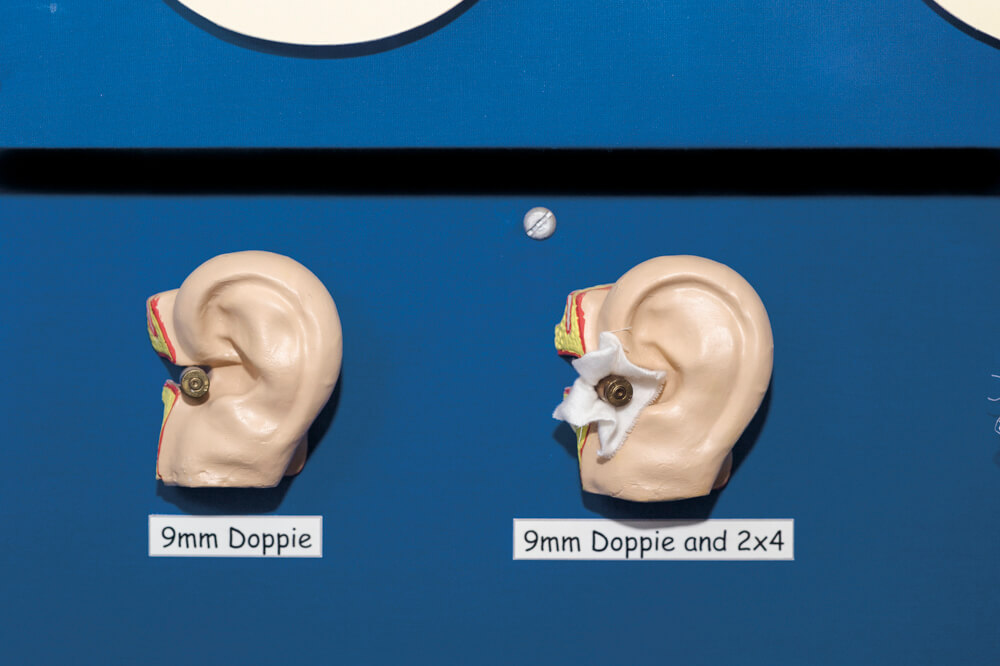
Doppies, 2018
An installation at the South African Armour Museum in Bloemfontein, detailing how soldiers used empty bullet casings and a small piece of cloth to protect their ears from the deafening sounds of explosions and gunfire.
Image 8
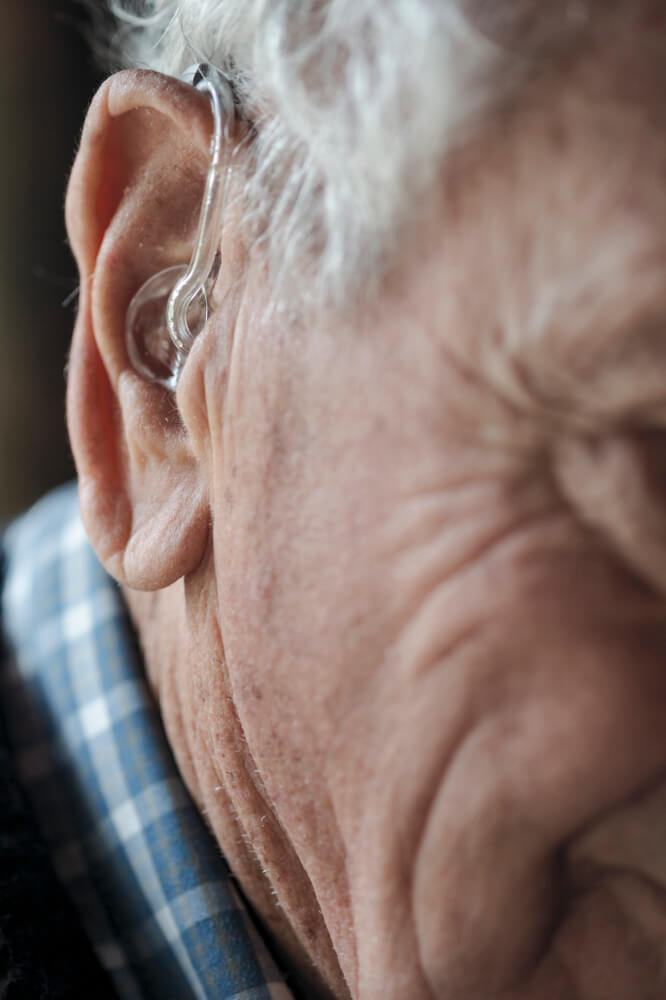
Gert Nel’s war-damaged right ear, Centurion, 2018
In a letter written during therapy Pa states that he made contact with the 32 Battalion during his military service. I had hoped that retired colonel Gert Nel, would be able to provide me with more information. He had been the commanding officer of this light-infantry battalion from 1978 to 1979, the same years Pa had been in the military. Through a contact, I was invited to his home, southwest of Pretoria. I explained my project and asked him to read Pa’s letter. He became visibly agitated. The things Pa stated he had done could not have happened under his command, said Nel. Pa would have been arrested. It’s probably not true, he added. Nel mentioned the recent surge in veterans writing about their time in the South African Border War. Many of the stories, he said annoyed him, and were either fabricated or borrowed. I tried to reason with him. Pa did not write the letter for fame or recognition. The letter was part of his therapy. It was something for him to reflect on. Something not meant for the eyes of others. Agreeing, he kept on reading. He deduced that although Pa might have made contact with the 32 Battalion, he had been part of the reconnaissance wing. Suddenly the contents of Pa’s letter seemed a little more credible to him. ‘Recces’ operated in small teams, often behind enemy lines, under different rules. Afterwards, the old soldier warmed up some leftovers for us. He served coffee in mugs emblazoned with the battalion’s symbol, a buffalo.
Image 9
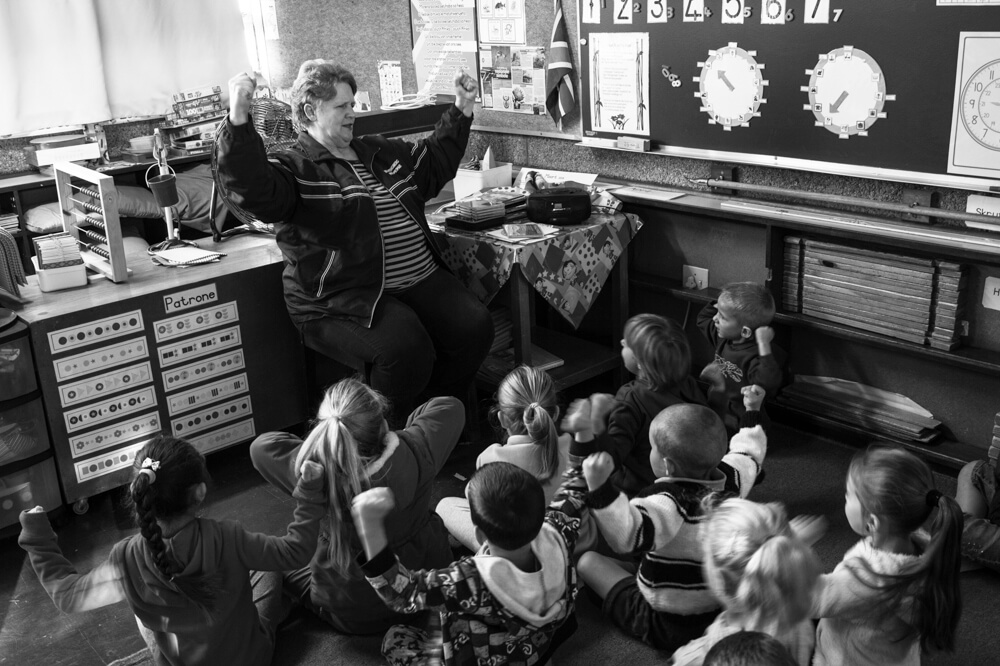
Tannie Thea and her class singing praise and worship songs, Newcastle, 2018
Image 10
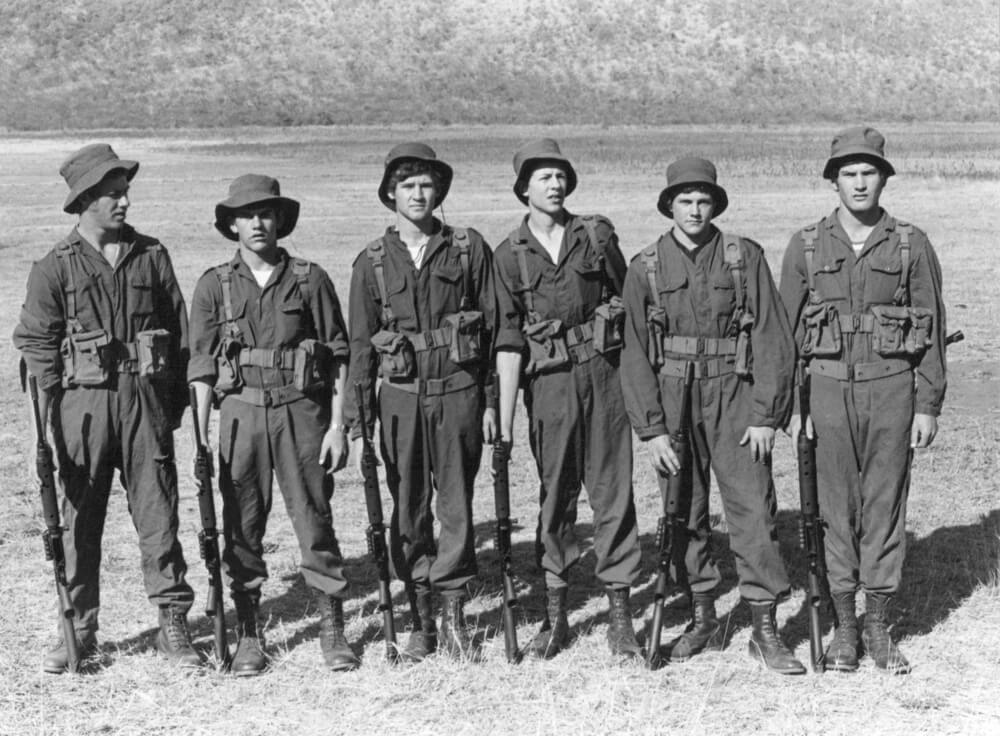
Pa, third from the right, with his R1 rifle, and fellow conscripts, during basic training, 1978
Image 11
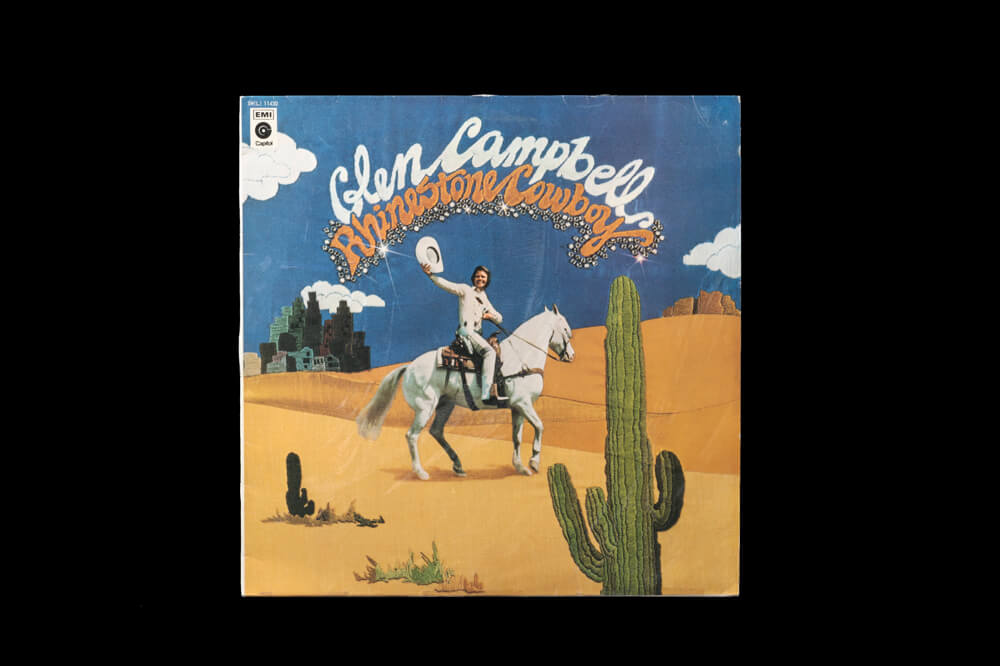
The story of the Rhinestone Cowboy and the hand grenade
Pa was sent home for a short while following an incident during his military service. His unit was involved in gathering intelligence, which meant interrogating captured members of the South West Africa People’s Organisation. During one of these interrogation episodes (torturing the enemy) a hand grenade exploded. Pa was said to have gone ‘bossies’ (crazy). Severely traumatised, he was sent home. He refused to leave his room or communicate with anyone. Pa repeatedly listened to the hit song Rhinestone Cowboy (1975) by American country singer Glen Campbell. The song’s themes of urban hustle and resilience made it somewhat controversial among conservatives; Oupa was not impressed. The hand-grenade incident is today remembered by most of the family as the moment that Pa changed. The child they had grown up with was no more.
Image 12
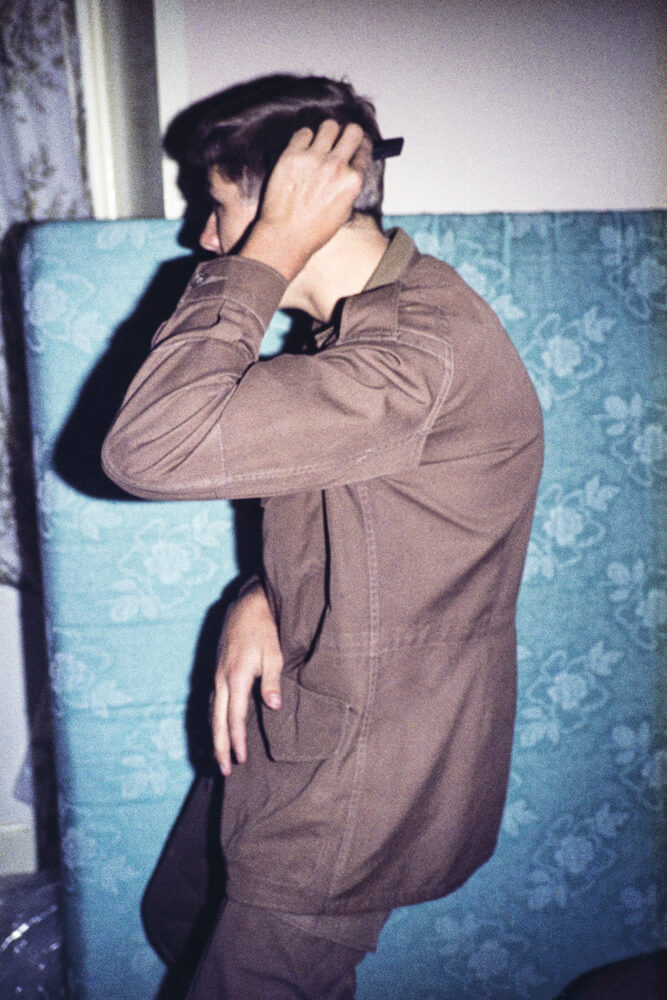
Pa, 17, in his browns, combing his hair before departing for service, White River, 1978
Image 13
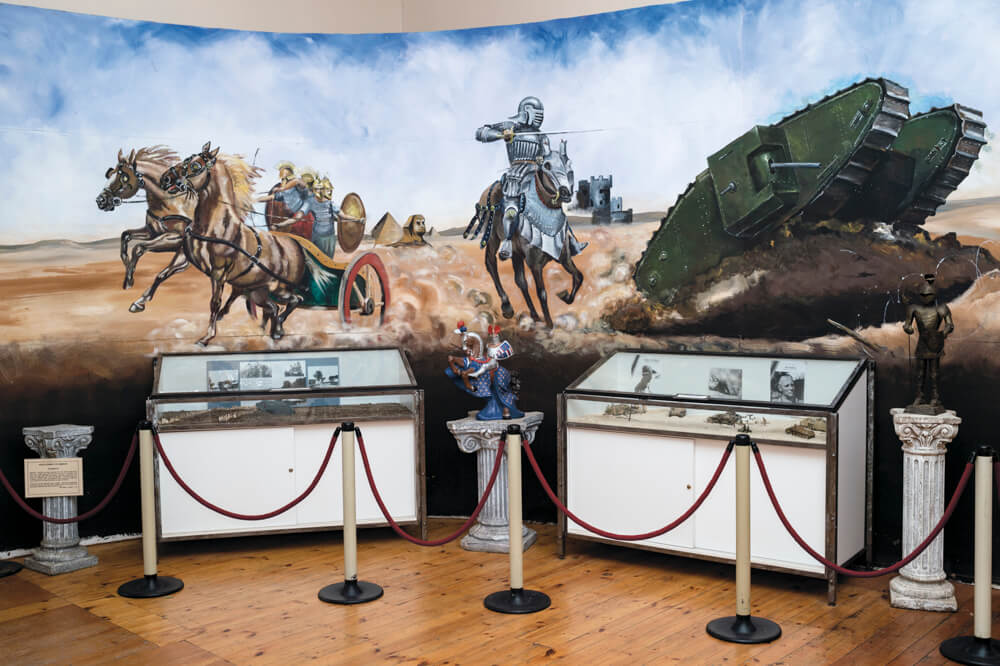
Mural in the South African Armour Museum, Bloemfontein, 2018
Image 14
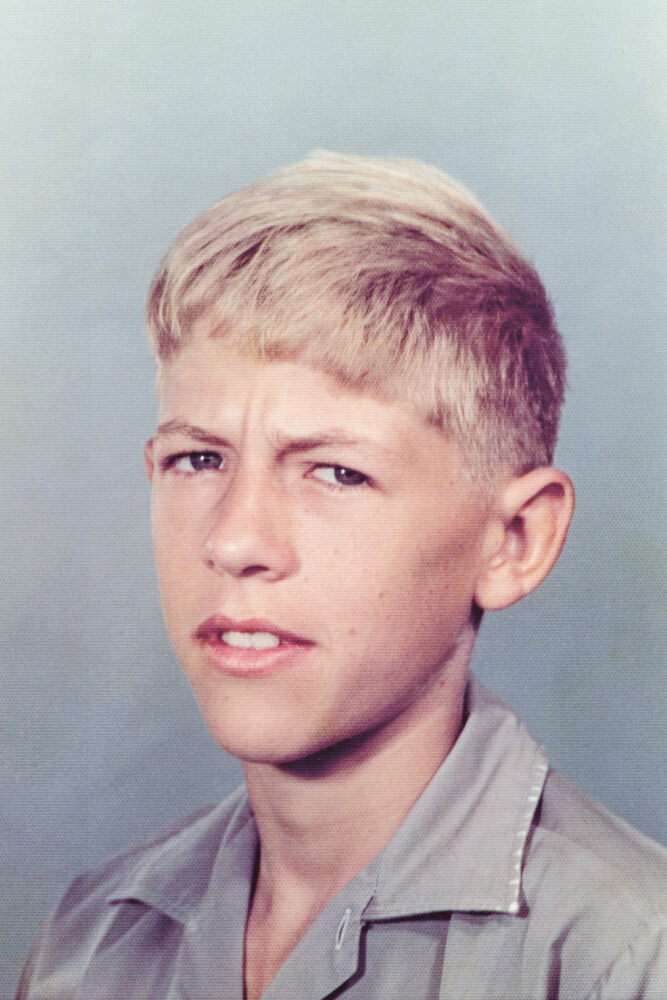
Pa, school portrait. Photographer unknown. White River, circa 1975
Image 15
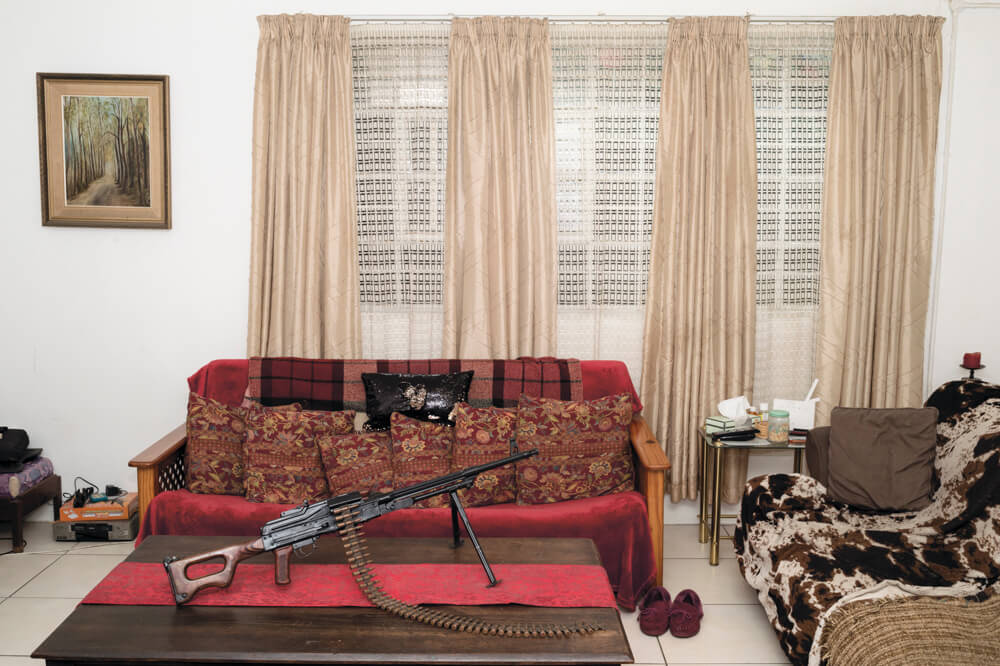
The story of Pa, the PKM and Corné’s lounge, Centurion, 2018
The PKM, a Russian-made machine gun, was Pa’s favourite gun. The South African military did not issue this weapon so I can only imagine how he got his hands on one. An incident involving a PKM haunted Pa throughout his life. Pa and his team were searching a village for guerrillas associated with the South West Africa People’s Organisation. Gunfire erupted. A woman started screaming and ran out of her home carrying a mortally wounded child in her arms. Pa knew it was his bullets that had killed the woman’s child. Pa later told me that he sometimes found it unbearable to hold us in his arms when we were toddlers.
I wanted to photograph a PKM in a lounge or a kitchen, to somehow portray how the trauma from the South African Border War is still present in the homes of South Africans. I found one
at an armoury that deactivates and rents out guns and other weapons to the film industry. I arrived thinking I could take it with me, and have some time to photograph it. However, the gun had not been deactivated and required the additional expense of an expert. I asked the owner if I could photograph the gun under the supervision of a staff member, perhaps someone who
lived nearby. ‘Yes,’ he said. ‘Corné lives upstairs.’
Image 16
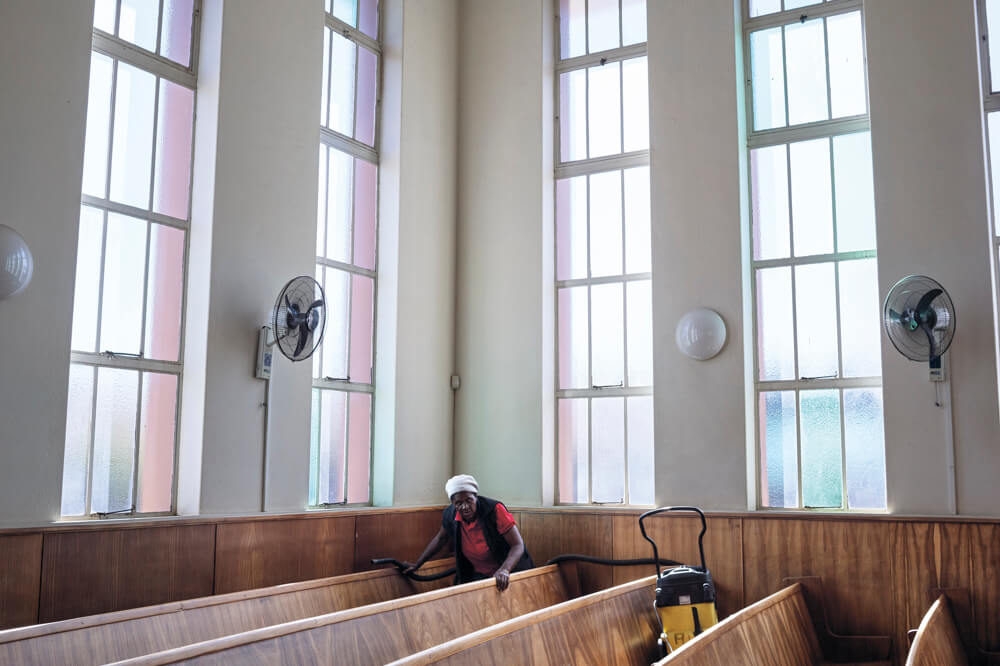
Sara, the cleaner at the church Tannie Susa and her family attend, Lydenburg, 2018
Image 17
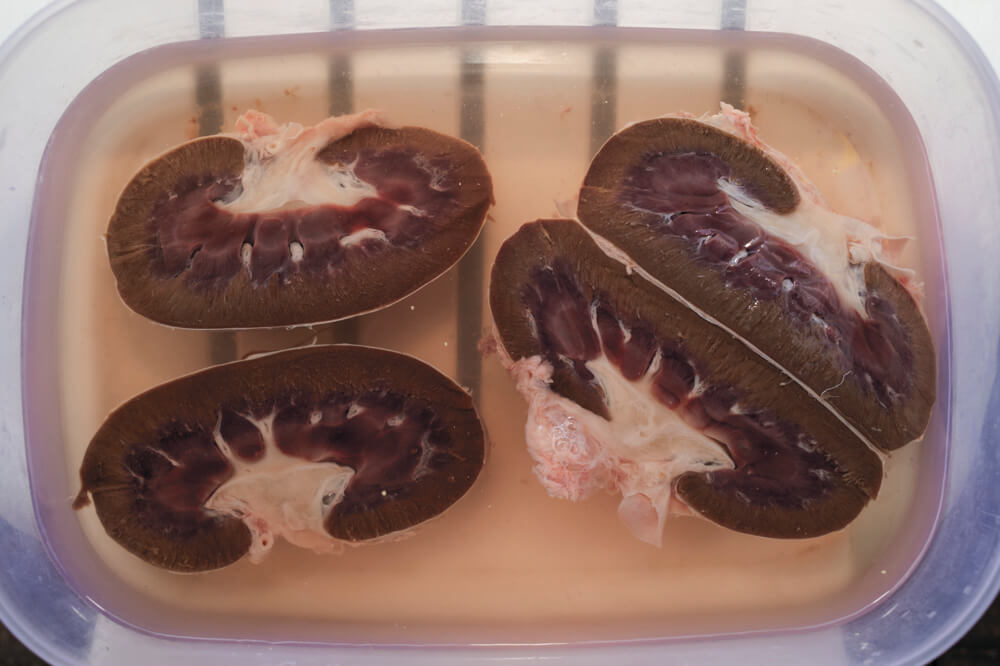
A Kudu’s kidneys, Lydenburg, 2018
Image 18
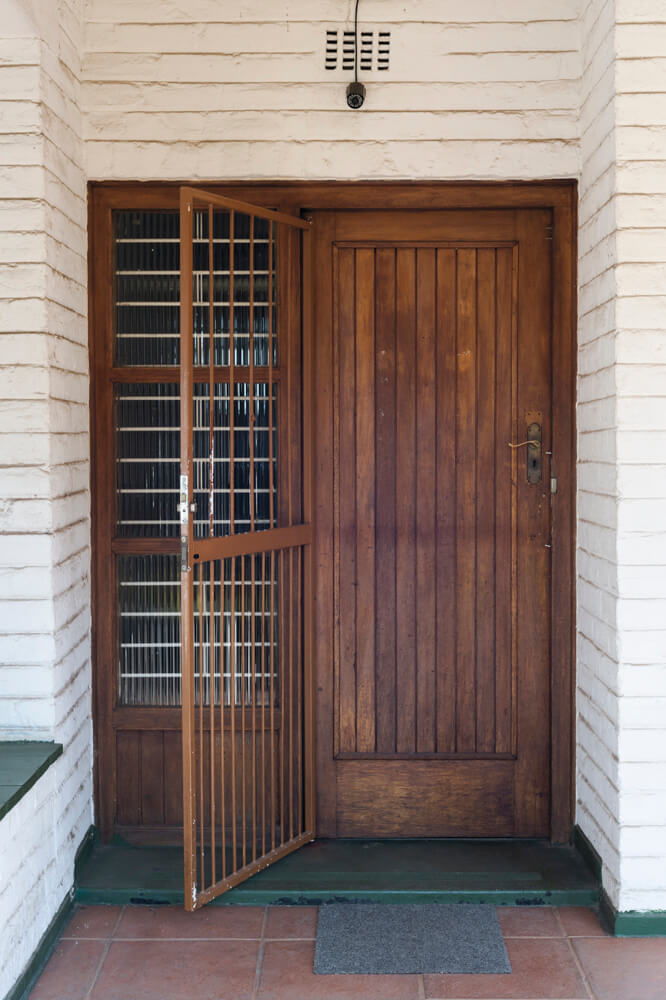
The front door, White River, 2018
Upon returning from his two years of mandatory conscription in the military, the first thing Oupa asked Pa was, ‘Hoeveel kaffers het jy geskiet?’ (How many kaffers* did you shoot?) Pa immediately revolted. On this porch, at this front door, Pa severed his ties with Oupa and everything he had been taught. It was the start of a lifelong journey of questioning, unlearning and rediscovery.
* An apartheid-era racial slur, the term was once a common insult against South Africans of colour. Dehumanising and extremely offensive, it was declared as hate speech in 2000 – its utterance punishable by law – the ‘k-word’ has since become a shameful reminder of the recent past to many white South Africans.
Image 19
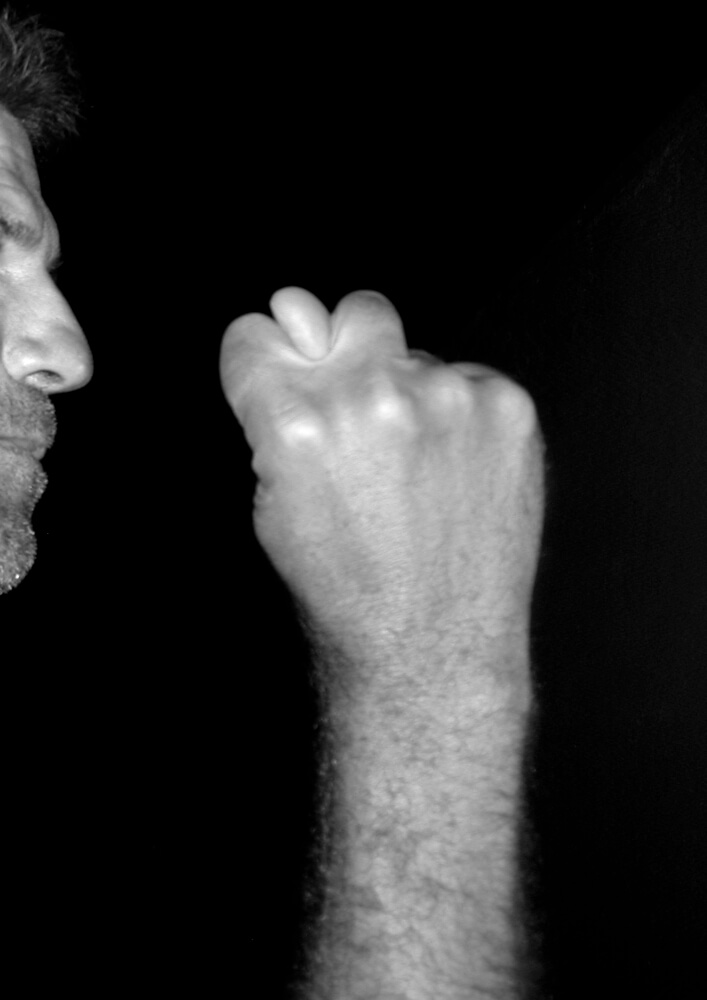
Pa, Toffie, Botswana, 2004
Image 20
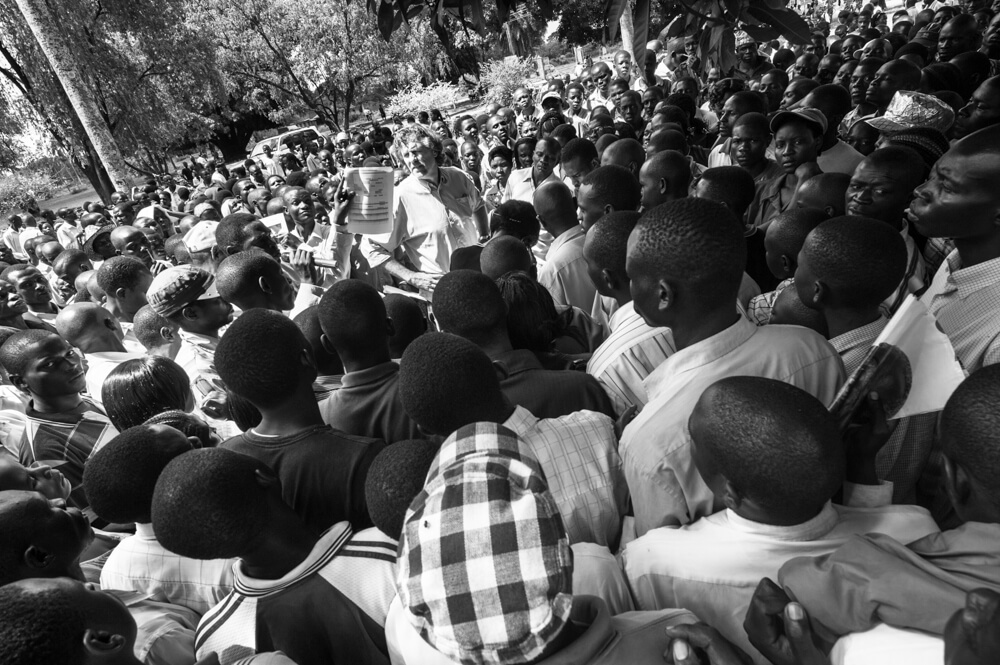
Pa in a village meeting, Hoima, Uganda, 2010
Image 21
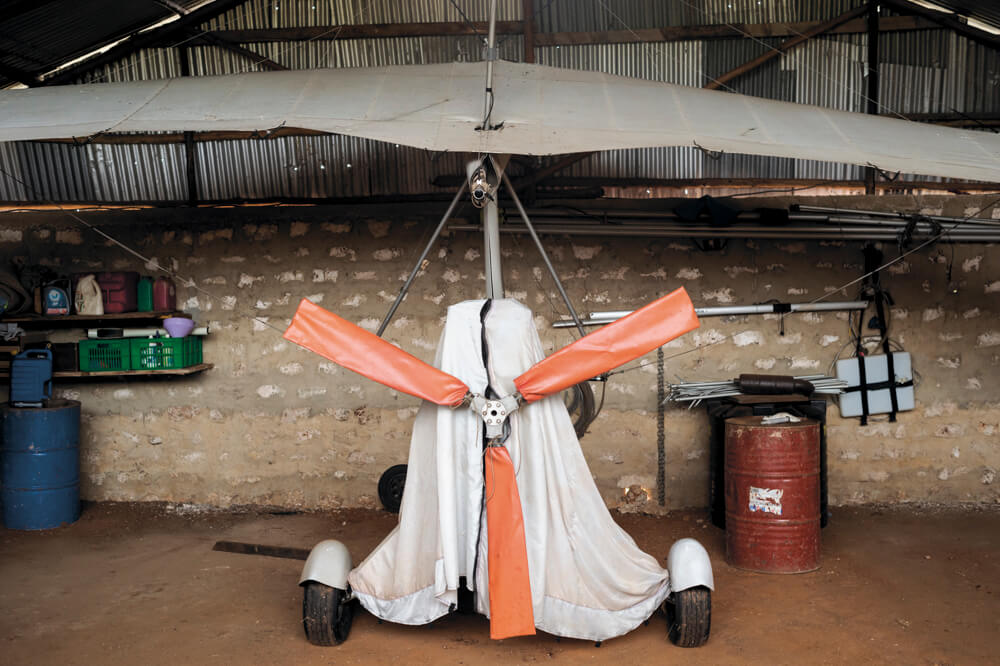
The reconstructed microlight, as it still stands in the shed, about a kilometre from the crash site, Ukunda, Kenya, 2017
Image 22
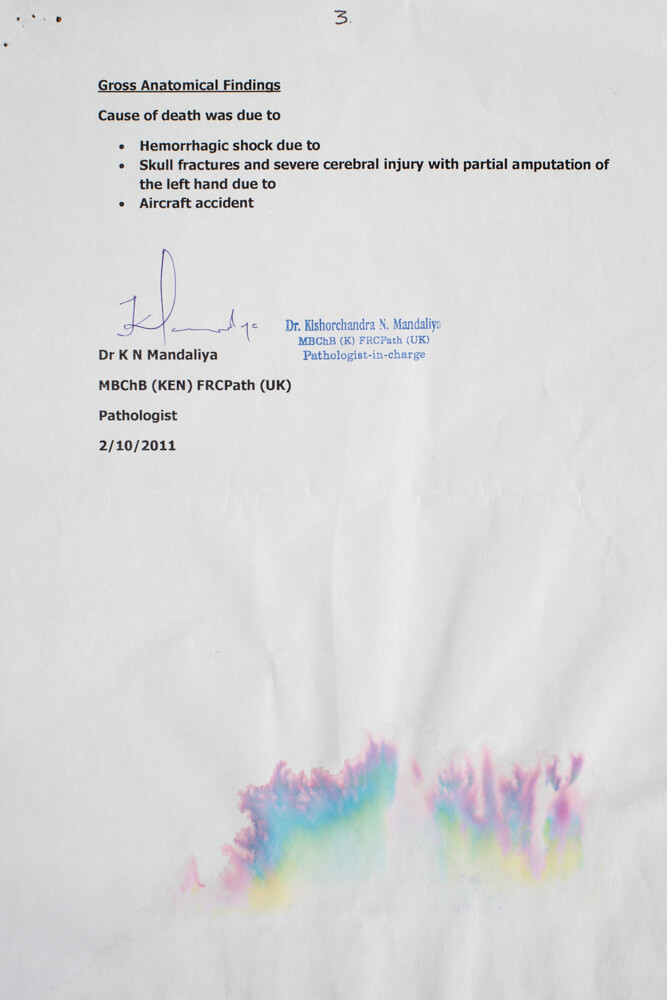
Page three of Pa’s autopsy report
Image 23
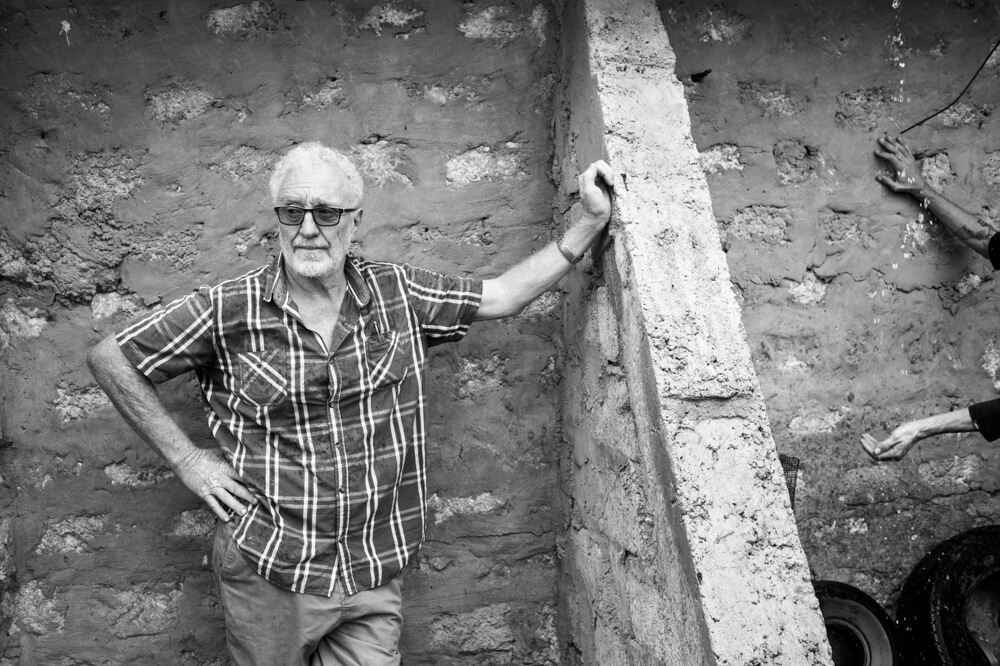
Mark Hawley and Joubert’s hands, in the rain, Ukunda, Kenya, 2017
Mark Hawley was the pilot of the microlight aircraft that crashed in 2011, killing Pa. He sustained only minor injuries. After initial scepticism, Mark agreed to meet up with Joubert and I. He later told us that he had a minor heart attack shortly after I had made contact. It became apparent that he was still struggling with what happened. Even though he barely talked about it, we experienced a man battling with guilt and trauma six years after the crash. He took us to his airstrip but refused to accompany us to the crash site. The little time we spent with him was tough but emotionally rewarding for all three of us. He rebuilt the microlight after the crash. It is stored in a shed about one kilometre from the crash site. Mark is still grounded because of his heart.
Image 24
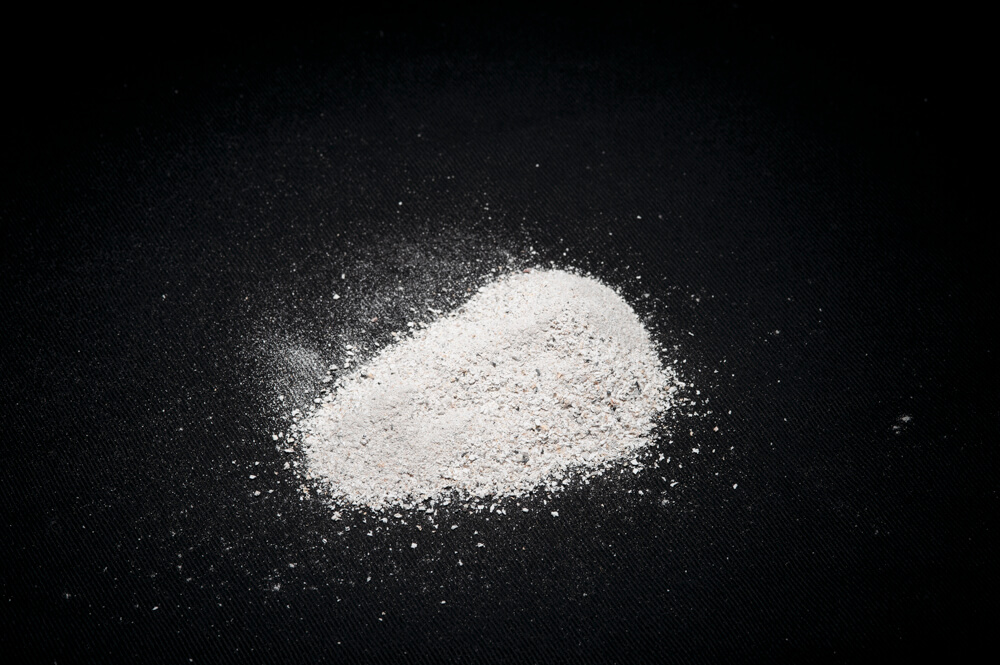
Pa’s ashes, 2018
Image 25
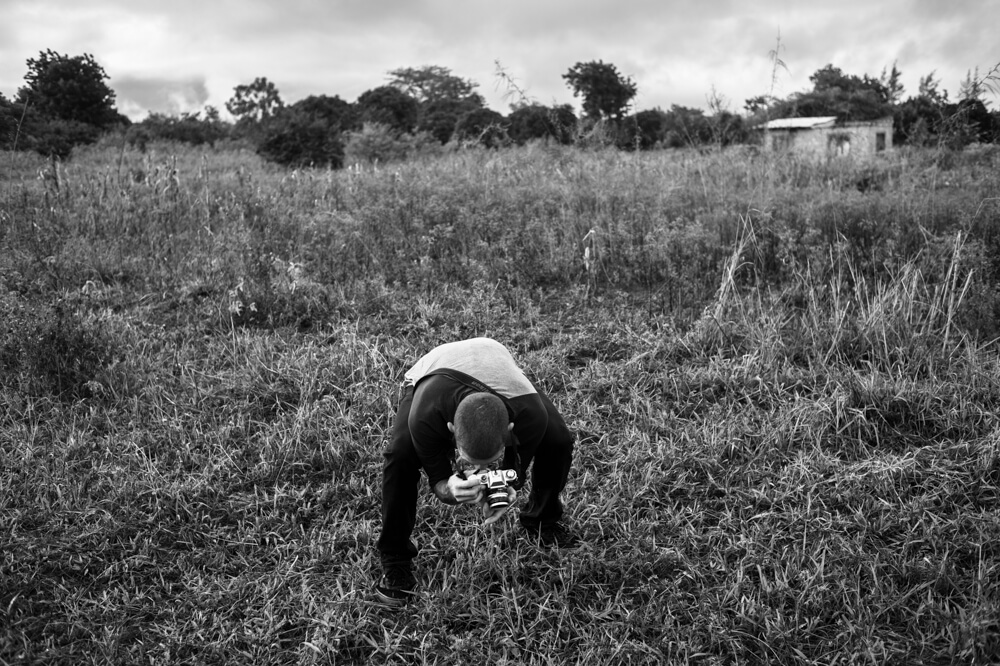
Joubert at the crash site, Ukunda, Kenya, 2017
Image 26
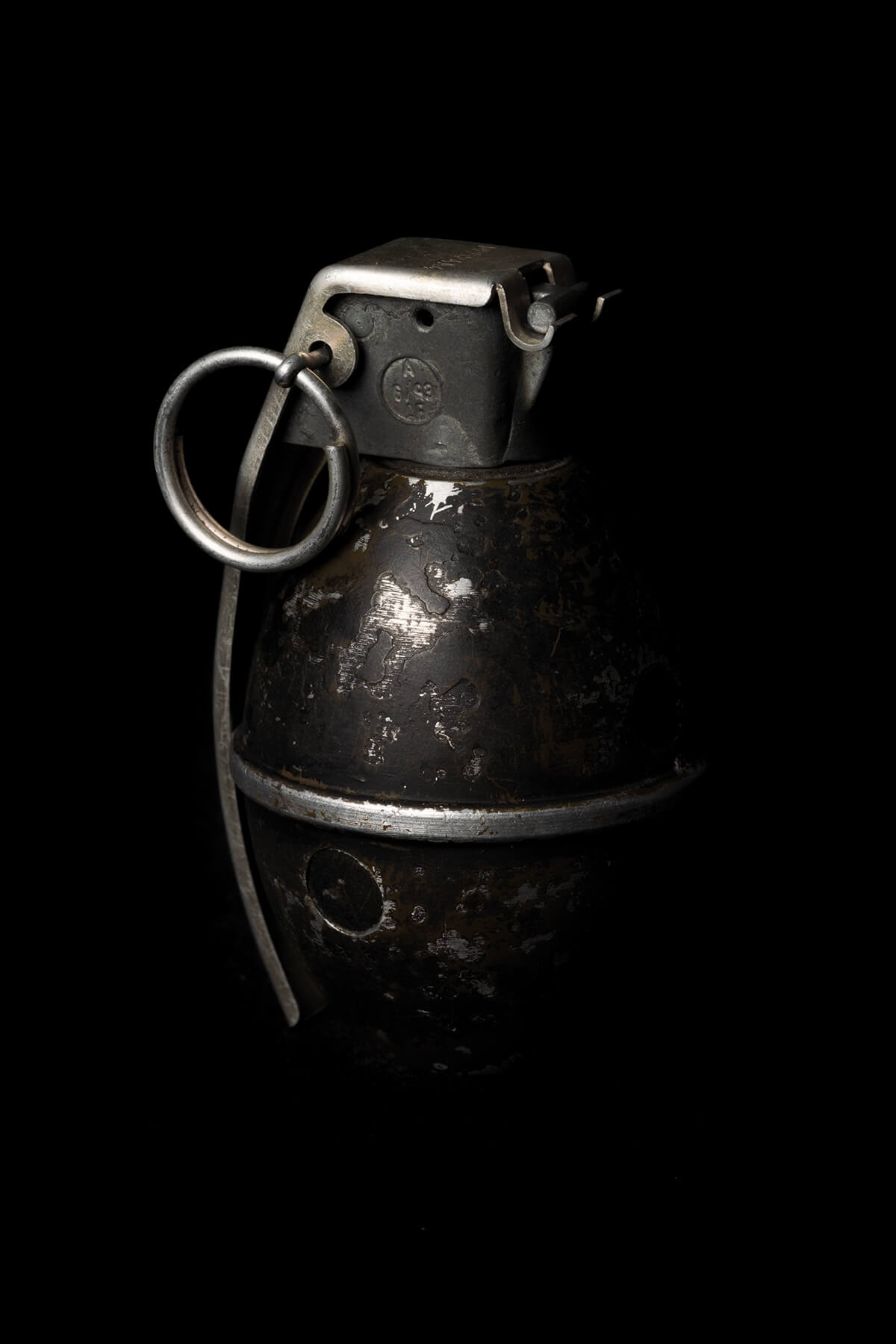
The M26 hand grenade, Oom Peet, Tannie Susa, Tannie Lisa, Oom Joggie, Ouma Kotie, Tannie Thea and the four seconds
Originally designed by the Americans, the M26 was adopted by aerospace and defence manufacturer Denel, and put into service during the South African Border War. The fuse burns for four seconds before the grenade explodes. It is very likely the same kind of grenade that exploded in Pa’s interrogation incident. In order to somehow convey the secondary trauma and loss felt by the family,
I asked them each to pose for a hand-held four-second exposure.